Sunday, October 5, 2014

Journal 3

Plan B 4.0
Chapter One: Selling Our Future

Photo Credit to Do Something

Chapter one had an intriguing take on the whole ‘world is coming to an end’ theory.  It is a corollary of global warming, where the changing climates cause the weather to become more extreme and melting ice glaciers are affecting the ecosystem. This theory is suggesting that just like history has showed us, food shortages might be the source of the decline of civilization.  History has a way of repeating itself and unlike the past we are aware that these problems exist due to the evolving technology we have today.  The statistics given in this book strongly support decreases in harvesting due to droughts, floods, and the harsh conditions that result from our environmental decline.  

Photo Credit to Ha Tran Bao

The decreases in the harvests not only occur due to the natural disasters, but the increase in population as well.  Farmers are trying to expand the harvest, but the question is will it expand fast enough to keep pace with steadily growing demand. According to the book, food security will deteriorate further unless leading countries collectively mobilizes to stabilize population, stabilize climate, stabilize aquifers, conserve soils, protect cropland, and restrict the use of grain to produce fuel for cars. I think taking measures into our own hands will be the only way to prevent any further damage from happening.

We all know we need to change our lifestyles and become more sustainable. We talk about it, and some of us actively try to, but honestly, most of us don't. Living more sustainably needs to be a part of our life. Many different countries have found innovative and creative ways on how to be more resourceful. For instance, Europeans get their residential electricity from wind farms, Chinese homes get their hot water from rooftop solar water heaters, and Iceland heats their homes with geothermal energy. Here at my school, we have one of the largest ice-thermal storage plants in the state. If every school, every state, every nation would make these positive changes like the ones listed above, our planet wouldn't be in such conditions. 

Saturday, September 6, 2014

Journal 2

University Colloquium: A sustainable Future
Excerpt from Earth in Mind: On Education, Environment, and the Human Prospect
Love It or Lose It: The Coming Biophilia Revolution
By David W. Orr

Have you ever heard of biophobia? Well, apparently it exists. Biophobia, in short, is being afraid of nature. Biophobcis are afraid of swimming in a lake or walking through a musky swamp simply because there are living things in them. They are afraid of the unknown. How can such quality come to form? These types of people are raised in the cities, with nothing but controlled environment surrounding them. They are submerged into this world that is unrealistic. A great contributor to this phobia is television.  Television has portrayed this world that has truly affected many into thinking everything out there is bad. Watching movies like Jaws and/or Survival Island are great examples of movies that trigger something into their brain that they can’t see past from what is fact and what is fiction. The point is movies were invented to shape your brain in a certain way.


On the other hand, “biophilia” as E.O. Wilson defined it as “the urge to affiliate with other forms of life”.  Erich Fromm once defined it more broadly as, “the passionate love of life and of all that is alive”. Both indicate that it is an instinctive bond between human beings and the other living systems on this planet.  For the Greeks Eros went beyond sensuous love to include creature needs for food, warmth, and shelter, as well as higher needs to understand, appreciate, and commune with nature (Bratton, 1992). I would call myself a biophiliac person. I love to recycle, save water, and take advantage of sunlight as much as possible. I love natural lighting. I ground myself to eliminate using florescent lighting during the day, even at night. During my field trip on campus, I realized how eco-friendly my university is. It really surprised me to know how far they go to keep our school clean and sustainable.  From solar compactors and recycling bins to ice-thermal storage plants, my school has their A-game right.  


All in all, biophobia can be replaced slowly by becoming biophiliac. The earth was given to us as a gift. A gift we need to cherish and love for eternity.  So instead of being afraid of it, go out on a bike ride through the park, go hiking up the Appalachian Trail, or take a camping trip up to Ginnie Springs and see the beauty that nature has to offer us. Take advantage of it before it’s too late! 

Sunday, August 24, 2014

Journal 1

Excerpt from Last Child in the Woods

Photo Credit to SMSD Website 

“… nearly 40 percent of American elementary schools either eliminated or were considering eliminating recess.”

This quote in particular stood out to me, and not in a good way. I cannot comprehend how this could even be considerable? Recess a waste of time? Recess is too risky?  Recess is needed! Recess is essential for building social skills, inspiring creativity, and burning off extra energy. Kids should be encouraged to run and play more; they have a ton of energy, and simply cannot be expected to be attentive in a classroom all day. It’s important to allow a child to recharge their batteries, therefore, enabling them to focus better for the rest of the day.

Touching the Sky with a Stick

“For years Ybarra had dreamed of pulling at-risk kids out of their urban environment and exposing them to nature.”

Wow, this segment from the book really astounded me. I had no idea there were alternative approaches to punishments available. What a great way to show these troubled teens a whole new world. Exposing them to the unknown, showing them there is more to life than street gangs and drugs. Most of these kids grow up in high-poverty neighborhoods seeing violence, drive-by shootings, and brutal home-invasion robberies. They do not know better. Taking them to Alaska, reconnecting them with nature, revaluating their lives, is truly a gift.

Stepping outside


Photo Credit to sabl3t3k

At the age of twenty-two, I still need to get my daily fix of fresh air. Even if I’m not running or biking or swimming, being outside calms me in a way that hardly anything else can. With an hour of nature, I go from being a bossy, opinionated, angry person into a bossy, opinionated, relaxed person. Walking through a park or just my own backyard can help me feel calmer and happier. One of my all-time favorite things to do when I have the time is to take long strolls along the beach. There is just something tranquilizing about looking at the vast sea and hearing the waves clash against the shore that helps me get in balance.  Nature is fuel for the soul. 

Thursday, December 5, 2013

Reflective Post

Photo credit to James F Clay 

This course has helped me overcome my fear of technology. I was unsure of myself at first, but I quickly became used to using discussion boards, creating websites, and working in collaborative projects.  

Through the various assignments, I have mastered the use of technology as never before. I have learned to have active discussions with my classmates and professor online. I have learned how to use the Internet and to use various search engines as vehicles for research, and how to evaluate the quality of the material I had gathered. In addition, I learned to create my own Web page and post it on the Internet. The class Discussion Board was also a new learning experience for me, as was participating in the Chat Rooms in Wiki. Both of these modes of communication enabled me to see how we can really get to work together without having to actually meet in person. Something I once doubted. These different forms of technical communication 
allowed me to participate by interacting with my class.  

Assignments:

Website Evaluation/Critique/Rubric – For this assignment we had to create a rubric for the purpose of evaluation of an educational children’s website. We had to see what made a truly outstanding. We all know there are some pretty lousy sites out there on the web. I chose National Geographic. It was probably one of the best websites I found where kids could spend hours engaged in learning. It was extremely easy to maneuver around the site without getting lost and there were so many visuals that added additional engagement to the site.

Collaborative Lesson Plan- This was probably one of the more challenging projects I did. It was the first group project in class. We had to create a lesson plan and integrate technology into the learning.  Since I had no experience with lesson plans, I was really confused on what had to get done. I wish we would have done a practice lesson plan in class, that way we had background knowledge on how to do one. Overall, I was thankful I did not have to work alone!

PowerPoint- For this project we had to create a PowerPoint presentation.  We either had the option to create one on assistive technologies or make a Pecha Kucha. A Pecha Kucha is done by using 20 slides that are only shown for 20 seconds each. No words are used just pictures and headers. I wish I had the guts to do the Pecha Kucha because it seemed like a fun and challenging presentation to share with the class.

Instructional Wiki - This was the second collaborative project we did. I really enjoyed this one. We had to select and conduct research about instructional strategies and explain how these strategies could be used to improve teaching and learning.

Teacher Web Page- Saved the best for last! This had to be my absolute favorite project to do. We had to create a teacherwebpage e-portfolio comprised of all the previous assignments, lessons and other significant resources discovered in class. We had the opportunity to be creative and think outside the box. Writing my biography for the “students” was really enjoyable.  This project really expanded my interest in teaching. I will definitely be using this site in the near future!

I own above photo. 


Discussions:

Legal and Ethical Issues:
o   Learning outcome: The student will evaluate and critique legal and ethical issues for using technology in the K-12 classroom.
Educational Technology Best Practices/Resources:
o   Learning outcome: The students will analyze and summarize the features of a selection of applicable websites providing test data from national, state and local education resources.
Assistive /Adaptive Technology for Students:
o   Learning outcome: The student will analyze and evaluate a selection of technological tools for assisting students with special and/ or diverse needs, and link the technology to specific outcomes for these students.
Technology Assisting ELL Students:                                   
o   Learning outcome: The students will analyze and evaluate a selection of technological tools for assisting students who are English Language Learners, and link the technology to strategies for teaching these students.


This was probably the only class I actually used the book to its fullest potential.  It contained a vast amount of information that could be really useful for students and teachers. I had to use this book for my daily Journals here on my blogspot. As I discovered every chapter, I learned more and more. One the coolest features this book contained were the “Tech Tools”. Every chapter contained different websites one could discover and enhance our learning. I think every chapter had an important role in my learning this semester. Truly enjoyed it!


This course has helped me to know myself better. It has taught me skills I will take with me to my future courses. I will know how to collect research, create web pages, and how to integrate technology in a fun way when I become a teacher. I have already used my research skills to help myself with my other classes. In my future courses, if I have questions, the Web has a vast amount of resources that I can use that I have discovered, thanks to this class.  

Sunday, November 17, 2013

Journal Post 11

Chapter 11
Engaging Teachers and Students in Learning and Self-Reflection

How can teachers use student participation systems as effective assessment methods?
             
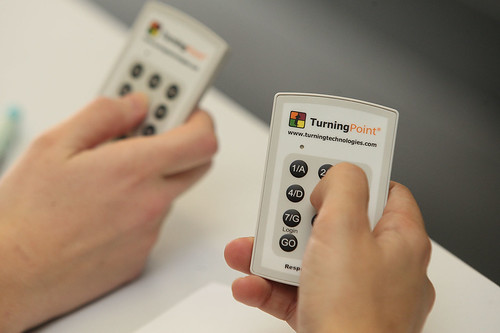
                Teachers can use student participation systems as effective assessment methods in many different ways. Student participation systems are also known as classroom response or personal response that offers interactive learning options for teachers and students. An example of such is using clickers. Clickers are great active learning tools to use. The benefits of using clickers in the classroom have shown that students become more engaged and enjoy using them. Since clickers provide a mechanism for students to participate anonymously, this allows all the students to participate, even the shy, quiet ones that normally would be too embarrassed to do so. Another reason why clickers are an awesome technology tool to use in the classroom is because clickers integrate a “game approach” that engages students more than the traditional class discussions.  Teachers also benefit from using clickers. Apart from actively engaging students during the entire class period, clickers (classroom response systems) gauge their level of understanding of the material being presented and provide prompt feedback to student’s questions. In my opinion this is the best tech tool to use in the classrooms. They are fun, practical, provide feedback, and keep the students engaged at all times.  

Photo Credit to Universidad de Navarra

Zoomerang
                Zoomerang is an online survey tool that provides prompts and templates based on themes that help make the purpose of the survey clearly apparent to the students taking it. I visited the site and it was really easy to navigate and everything was understandable. The dashboard was clean and the tutorials were great. You could either design the survey from scratch or create it from the template. I loved the templates there. This was probably the easiest survey site I’ve found around there. I will definitely be adding this to my Delicious account for future reference!

Photo Credit to Craig Taylor 

Summary

Chapter eleven examines how teachers and students can be active participated in evaluating and assessing their own growth as learners using technology. Teacher, as well, as students enrolled in college and university teacher’s license programs, are engaged in dual assessments while they are evaluating the work of their students, they too, are being evaluated by college faculty or school personnel. The chapter also explores how teachers might use performance-based portfolios, presentations, and publication for personal and student assessment. The chapter concludes with ways to use democratic classrooms online survey software, like Zoomerang, and student participation systems (clickers) to promote and increase student’s involvement in their own learning.  

Monday, November 11, 2013

Journal Post 10

Chapter 10

Promoting Success for all Students through Technology

How can teachers use technology to create universally designed classrooms?

In creating a Universally Designed curriculum, technology presents benefits and challenges to student learning. Every teacher is an instructional designer deciding everything from how seating is arranged to what instructional activities will be conducted. The most insignificant change can either make it or break -- like I would say. It could either draw the student’s attention or drift them away from the focus of the class. Teachers have to be careful when redesigning their classroom. Some small changes that can done in the classroom are providing alternative seating, such as ball chairs, providing speech to text software that enables students to record their voice as text documents, and lastly, providing talking books. When I was observing at a Middle School I saw the students were using clickers during class. This is a great way to determine comprehension of key concepts among the students. Another way to use technology in the classroom is to develop short video and audio productions to explain and expand the content. It will benefit students with a variety of learning styles.

Photo Credit to Jim Frost

Calculators

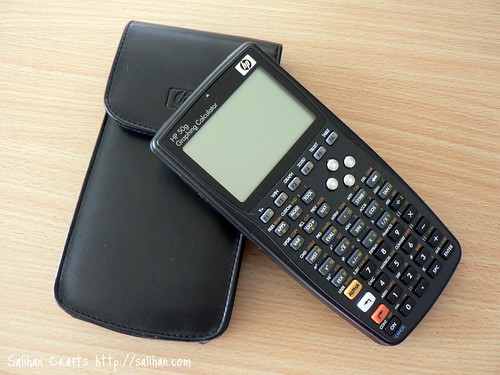
We live in a society that is always changing thanks to the ever advancing technology. We are in a time where even iPads are common in every classroom in the country. Technology is huge and learning how to use such technology is also important.  This is why it’s good for students to have an understanding of how to use a calculator. As far as electronics go, it’s a fairly simple instrument to use and students will need to use such devices elsewhere throughout their lives. Just think about it calculators are something that your students are going to use to set a budget, do their taxes and complete other tasks throughout their lifetimes. Let’s say I taught Chemistry is High School. When giving out an exam, I don’t want my students to spend most of their time on the one problem that includes a bit of math. So providing my students with a calculator can ensure me that they will not spend a whopping five minutes on the problem, instead spend less than three minutes on it.

Photo Credit to Salihan Laugesen 

Summary
              
            Chapter ten examines how computer technologies expand opportunities for teachers to meet the learning needs of all students, and regular or special education classrooms. Technologies developed for special needs learners can be very useful for other students, because they make possible teaching activities that respond to a range of learning styles and preferences. It also discusses differential instruction, universal design for learning, and reviews a range of assistive digital tools that support successful learning for all students.

"Teachers should fashion teaching and learning so that all students have the chance to learn and to demonstrate what they have learned—not just those who happen to be gifted with words and numbers. " -Howard Gardner
      

Thursday, October 31, 2013

Journal Post 9

Chapter 9
Creating and Sharing Information with Multimedia Technologies

How can teachers use video resources in their teaching?

Teachers, who use instructional videos in class get the students to retain more information, understand concepts more rapidly and are more enthusiastic about what they are learning. With video being part of a thoughtful lesson plan, students often make new connections between curriculum topics, and discover links between these topics and the world outside the classroom without having to step foot outside the classroom. Many equipment are available at school: television monitors, video players and educational DVDs.  But an alternative to using DVDs or videotapes in the classroom, teachers relay more on video resources that are found on the Web.  There are massive amounts of videos already available online in all sorts of subject areas. An example of one is YouTube. YouTube contains thousands of educational videos that are extremely useful. Teachers utilize these videos in their curriculum. It increases the student’s retention of the subject and encourages them to seek out educational videos as well.  

Photo Credit to jm3 on Flickr

There are many successful strategies for using videos and DVDs in interactive ways. Using the pause and rewind bottoms during segments of the video, engages students in discussions about what they are viewing, making it an interactive experience.  Another strategy that can be done in class while showing a video is having the students write responses or taking notes on what they are seeing.  Some teachers already have a worksheet made with questions on them in the order of the film so students can easily answer them while still watching the video. That way you know the students are paying attention and understanding the video.


TeacherTube
                TeacherTube has a variety of videos, documents, audio, and photos that are valuable for teachers of all subject areas. The possibilities are endless and extend much further than just showing videos to your students. Teacher Tube is designed to look like the popular website YouTube. It provides free online space for sharing instructional and educationally videos, made by teachers and students. Videos of the day are displayed on the main page and students and teachers can search up any subject or content as well.  An advantage of using Teacher Tube is that the content is safe for viewing in schools.  It’s a valuable resource to use for the classroom.

Summary

                Chapter nine focuses on presenting information using PowerPoint software, videos, DVDs, digital cameras, movie making software, and podcasts as tools for emerging students in creating and sharing information commutation through multimedia tools. In this century, cameras are nearly available anywhere from phones, iPods, and iPads. Tools for recording are more assessable and cheaper as well. Collaborative sites like TeacherTube make it easier to post and share videos with other educators and students. Finally, the Web contains a vast variety of videos, like YouTube, that can be useful to use in the classrooms. Emerging technologies in the schools offer exciting ways to share and teach ideas and concepts with others.